I had to throw my old coffee machine out. I think something was growing in it.

Got a new one. That's really exciting.
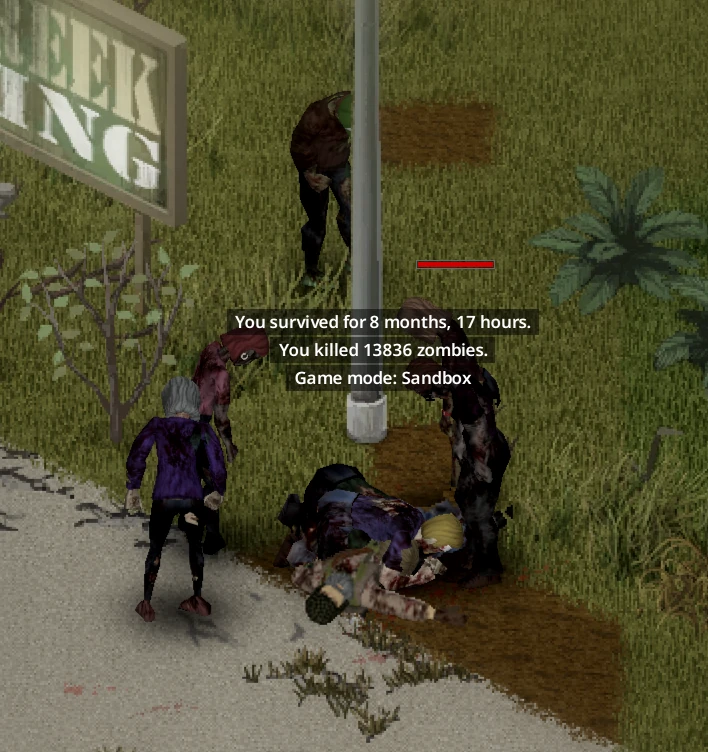
Don't cry for me, my soul is already dead.

Don't cry for me, my soul is already dead.

I don't know, man. I'm trying to post more.

Author's Note — 2026-08-22

So I started playing RimWorld again, instead. Really good move for my time.

Test post.

2026-08-08

I need a test post, so this is me testing it.

Yeeeiiikes... yikes-a-roo.

Yeah, it's arresting. I don't know who was out of date. This feels so quaint to me like an extremely confused and confusing time traveler.

Are we still doing radical Islam? I thought we weren't doing that anymore. I thought it was the trans people that were destroying society.

NASA was driving starships when SpaceX's grandpa was still in diapers.

Everybody always forgets everything.

I mean, it did a really good job. Fuck me.


Now we're really looking for bonus points here. But on the reports, any chance that you can throw some annotation lines, like vertical lines, for when the sessions and weekly/monthly usage sessions turn over? It'd be amazing to see the percentages, too. I don't know how you work that into it. I'm open to theories. [...]

Excellent idea — and I have a theory worth testing immediately. The subscription's limit windows (5-hour session, weekly, weekly-Opus) and their utilization percentages are exactly what Claude Code's /status shows, and it gets them from an OAuth usage endpoint. If the Fleet API can read that, it can serve both the turnover timestamps (for vertical annotation lines) and the live percentages. Let me verify the endpoint exists using the host credentials — carefully, without printing any secret:

...

Bonus points earned — the theory panned out on the first try and everything is live. Here's the shape of it:

The theory, confirmed: the percentages and turnover times you wanted come from the same OAuth usage endpoint Claude Code's /status reads. New GET /limits on the Fleet API (commit 0ad7e93) serves them fresh: 5-hour session window, weekly all-models, weekly Fable-scoped (the currently active constraint at 39%), and the monthly extra-usage credit pool (CA$2.17 of $100). It uses your host credentials but exposes only percentages/severities/reset times — the token never leaves the process — and it appends a change-only snapshot history, which matters because weekly windows are periodic (projectable ±7 days) but 5-hour session windows are rolling, so past session boundaries can only come from observation. That history starts accumulating today.

On the reports page, live now (Panopt run 0635cf0d — $3.65 est., pleasingly self-documented in its own dashboard):

  • Utilization strip under the header: session 12% (resets in 3h), weekly all 22%, weekly Fable 39% with the active-window highlight, and the monthly extra-usage chip — severity-colored, live countdowns.

  • Turnover annotation lines on the time series: subtle dashed verticals — ten weekly lines already drawn across the default range (back-projected from the Aug 8 reset), the two coinciding weekly resets deduped into one joint label. Session lines draw only from observed resets and only on ranges ≤7 days (they'd be noise on a 57-day daily chart); monthly lines only when a credit-pool drop is actually observed — never guessed. Everything fails gracefully: if the host token goes stale, /limits 503s and the strip/lines just hide.

The bookmark: ACAM-37 in HomeLab captures the idea and its extensions — an hourly /usage bucket so session-window lines get an intra-day view where they shine, per-agent limit windows (each agent has its own OAuth session; needs an in-container fetch), a utilization-over-time overlay ($ per percent-point by model — arguably the real model-selection metric), and turnover-aligned "this week" panels. Also written to my memory, the vault Usage API page, and a progress comment on VLF-14.

One operational note: dispatching to Panopt took three attempts — first n8n's ticket-flow runs kept winning the busy guard, then an idle interactive console open in its container (someone asked it what model it is — you?) held the guard too. I used force=1 only once I confirmed the console was idle at its prompt; if that was you mid-something, nothing collided — the run only touched the dashboard files.


How did you update the dashboard? Did you create a ticket and assign it to panopt?

No ticket — I used the Fleet API's raw ad-hoc prompt endpoint both times: POST /agents/panopt/prompt, the path we built for exactly this case (an operator-composed one-off instruction, piped verbatim to a headless claude in Panopt's container). The first dispatch (tile placement) ran synchronously with ?wait=1 and returned its report inline; the second (annotation lines) went through the busy-guard saga — 409s from n8n's triage runs and then from your idle console — so I fired it 202-style with ?force=1 and polled the run registry for the result.

So the dispatch wasn't ticket-driven, but the paper trail still is: both prompts explicitly instructed Panopt to treat the work as ACAM-36 follow-up, and it did — commits pushed onto the existing ACAM-36 branch (MR !3), workspace log entries written, and comments left on ACAM-36 for each change. The runs themselves are also in the registry (5c8ce5b5, 0635cf0d) with full logs, models, and cost.

The tradeoff I weighed: the ticket flow (triage-ticket-v2 → approval gate → execute-ticket-v2) is the governed path, but it's built for work arriving asynchronously that needs triage and your approval before execution. Here you'd already specified and approved the change verbatim in conversation, so routing it through triage would have added a round-trip through the very approval you'd just given — and ACAM-36 was already sitting in Testing with the work being a small amendment to it. Raw prompt with an explicit "log it, comment on the ticket" instruction seemed like the right altitude.

That said, it's a judgment call with a real downside — the initiation isn't visible in Linear the way a ticketed request is, only the outcome comments. If you'd rather these operator-relayed changes always enter as tickets (new ticket or a comment + state bounce on the existing one) so the board reflects work-in-flight, say so and I'll follow that pattern — happy to note it as a standing rule.

No idea if they're stealing all of your data, but who can ever say these days?

https://addons.mozilla.org/en-US/firefox/addon/youtube-recommended-videos/

Still, on the off chance that it isn't stealing all your data, this is pretty damn life-altering.

← Newer Posts Older Posts →